Fairies Wear Boots
“Come away, oh human child!
To the waters and the wild
With a faery, hand in hand,
For the world’s more full of weeping than you can understand.”
-William Butler Yeats
In relation to the recent episode of our Insane Signals podcast (#3), dedicated to UFO’s and aliens in pop-culture, I wanted to take an opportunity to briefly investigate the uncanny reports of UFO’s in the modern era, in comparison to fairy sightings in medieval literature throughout Europe.
While history has always, in one form or another, had depictions of strange flying craft (see Ezekiel’s Wheel or the Hindu Vimanas), the ancient folklore of fairies and nature spirits have invariably been prevalent.
From conceptual precursors appearing in the ancient world such as the Greek and Roman nymphs, satyrs, and other nature deities like the great god Pan, to elder Celtic depictions of the Green Man, long has the mysterious world of the Fae provided accounts of eerie lights in the sky, human abduction and interbreeding experiments, missing time, and strange fairy circles appearing in forests and fields.
Fairy rings, also known as fairy circles, elf circles, or pixie rings, are circular areas of lush grass or mushroom sprouts, notably associated with a magical gathering of dancing “little people”.
The folklore usually states that if you encounter a fairy ring you’ll receive good luck, or alternately, you’ve disturbed the devil and are soon to have ill omen. The creatures were well known tricksters, so you never knew what you were going to get when dealing with their kind.
In the 12th century it was English historian Gervase of Tilbury who first wrote of beings called “portunes”, who were stated to be small household spirits resembling goblins. This is among the first literary accounts of what might be commonly associated with fairies.
While in the 14th century we have the medieval romance of Lancelot, the Knight of the Cart by Chretien de Troyes, giving us the Lady of the Lake and a race of water fairies, that further exemplified the idea that these beings possessed magical powers and supernatural gifts of “otherworldly” origins.
Likewise, in the 13th - 15th centuries, Gothic cathedrals throughout Europe began using the visage of the leafy “Green Man”, a male representation of nature’s fertility, and woodland spirit which was popular among earlier pagan and Celtic traditions.
Shortly thereafter in the 17th and 18th centuries, begin personal accounts and reported sightings of fairies, both alone and while marching in armies deep within the forest.
Whether they were known as Brownies, Goblins, Banshees, Sprites or Bug-a-boos, it was generally considered good practice to avoid these beings, with reports of missing time, hypnotizing lights, and strange crop circles being reoccurring themes.
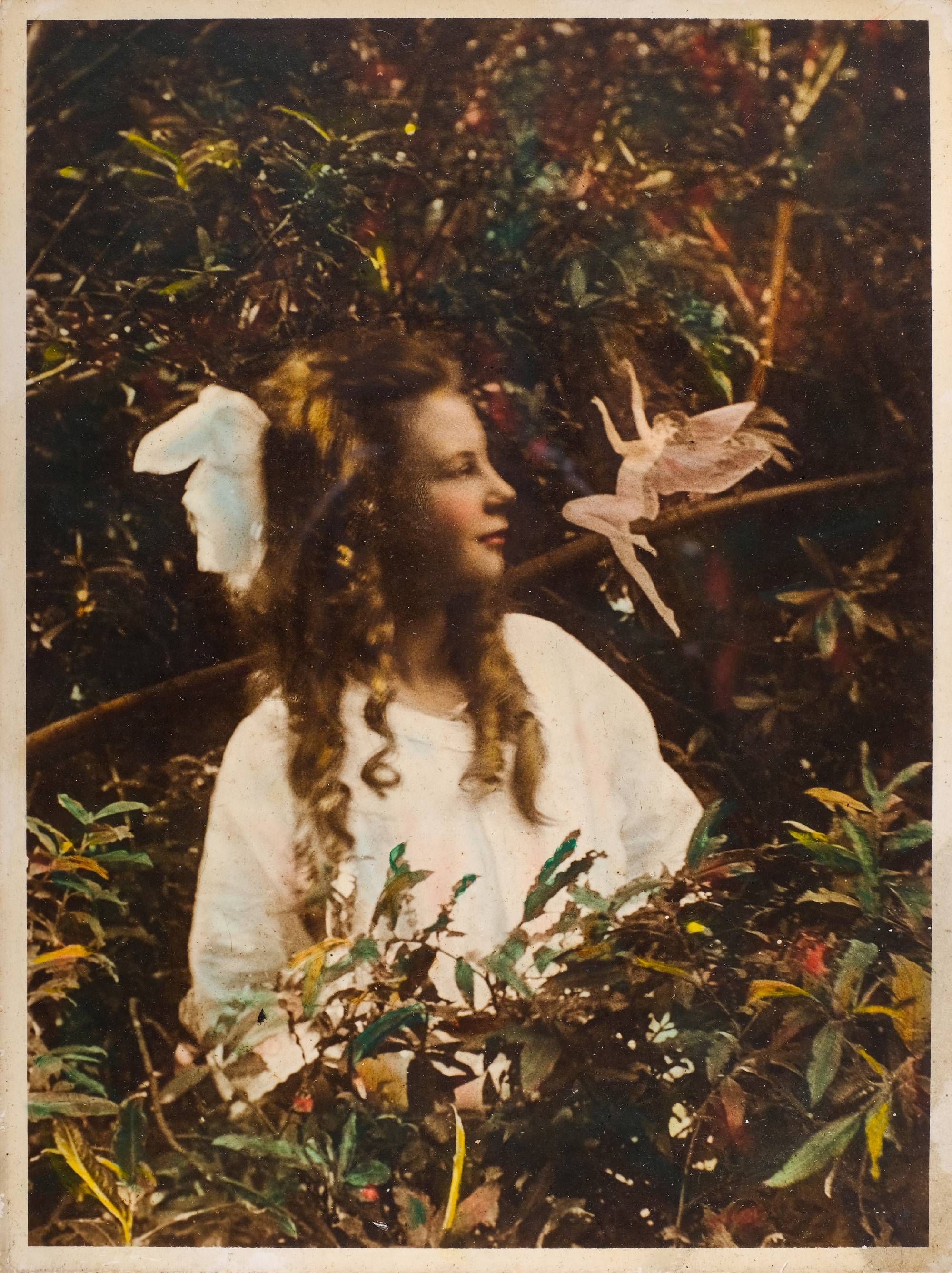
Fairies really hit the mainstream in the early 1920’s, with a whimsical series of photographs known as the Cottingley Fairies of 1917, in which two young female cousins are shown with a variety of lovely fairies dancing about in frolic.
While the photographs were later revealed as forgeries using forced perspective and cardboard cutouts, they still captured the imagination of the public, as well as popular authors such as Sir Arthur Conan Doyle.
Also during this period we have the 1911 novel from J. M. Barrie, Peter and Wendy, which would go on to become a 1953 Disney adaptation, making the spunky character of Tinker Bell an official mascot and firmly embedded in pop-culture.
Yet, while public interest in fairies declined over the course of the 20th century, it didn’t take long for the fascination in UFO’s, abductions, alien sightings, and “little green men” to take their place as a catch all for strange lights, crop circles, and missing time along desolate country back roads.
Indeed, Trickster Loci have always worn many faces, in many forms, throughout the course of human history.
-----
Mad Mike Mandrake is the creator of the Horror to Culture website, host of the Insane Signals podcast and vidcast, Editorial Director at the House of Scream online Magazine, and collaborator in the Scary Salad Network.

Mike Flanagan’s Carrie: Not Quite but Almost In-Name-Only