Ghosts in the Machine
When I first started the Horror to Culture website and podcast, of course I wanted to try and have a little fun with the genre that I’ve loved and appreciated my entire life, and pay homage to some of my favorite films, books, and topics.
However, being the Horticulture of Horror, my goal has always been invariably and inexorably linked to the heritage of horror, in terms of oral and written storytelling traditions. One of the oldest forms of storytelling would undoubtedly come in the form of the classic ghost tale, spanning continents and millennia.
Today’s piece isn’t meant to provide a comprehensive view of the ghost story (for a more comprehensive account of Ghosts, please check out the latest INSANE SIGNALS podcast devoted to the topic), but instead to focus on a specific time period, a renaissance which occurred with the advent of photography in the early 19th Century.
While the first photograph, “View from the Window at Le Gras” was taken in 1826 by French inventor Joseph Nicéphore Niépce, it didn’t take long for the Victorian era custom of mourning deceased loved ones to come into morbid fashion with the craze of post-mortem photography in the 1840’s.
This, coupled with the massive death toll of the US Civil War of the early 1860’s (which ultimately claimed up to 750,000 soldiers), inspired Boston photographer William Mumler to create the latest fad, Spirit Photography.
Working in conjunction with ideals from the popular Spiritualist Movement of the era, along with the burgeoning New Age Movement, and in part because many early photographs often contained “unexplained” orbs and light fluctuations, methods of double exposure were used to “reveal” ghostly apparitions of the newly departed dead.
Notably, fallen soldiers from the ongoing, bloody Civil War.
In the spirit of innovation (no pun intended), the oldest surviving film put to camera comes from 1888’s “The Roundhay Garden Scene” by another French inventor, Louis Le Prince.
Though running at just under 3 seconds, it should be noted with today’s theme of Ghosts that one of the actresses, Sarah Whitley (also the mother-in-law of Louis Le Prince), died immediately following its release.
La Prince himself, considered by many to be the “Father of Cinematography”, mysteriously disappeared without a trace in 1890, never to be seen or heard from again.
Also in this year of 1888, George Eastman Kodak created the first mass marketed camera, at the same time “Jack The Ripper” was terrorizing London, becoming the first media hyped serial killer.
It begs the question: Did something escape?
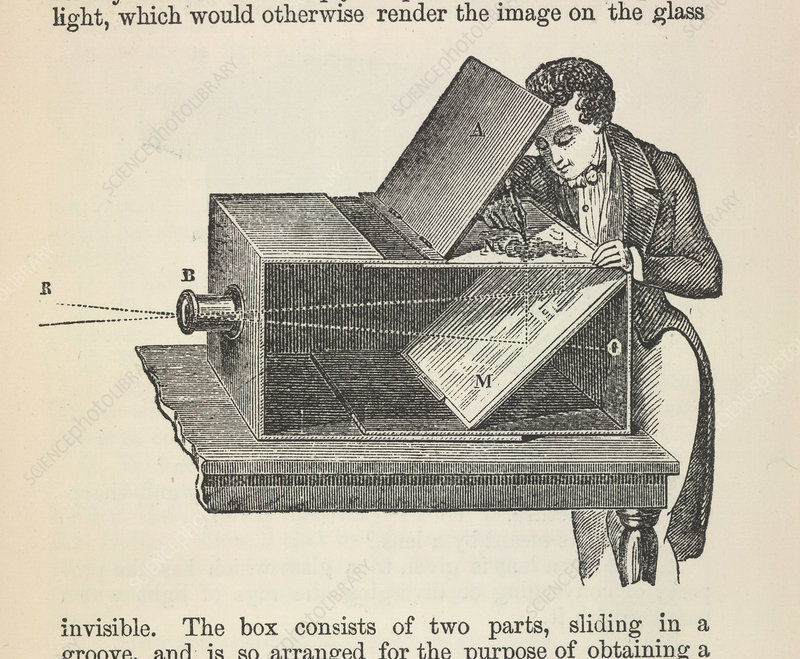
The term "Camera Obscura" was coined in 1604
Along with greater availability of the camera came a wave of ghosts, fairies, UFO’s and hidden entities capturing public imagination. Ideas could now be brought to life via an emerging new method of sleight of hand magic and playful trickery. The casual eye could no longer be trusted to distinguish fact from fantasy though photography, and on the big screen.
This apparition is still manifesting like never before in the 21st Century, in on our homes, our televisions and computers, beaming directly into your back pocket through cell phone and Wi-Fi.
In modern times we have an endless influx of television shows and YouTube channels devoted to "ghost hunting" and capturing hidden things on film.
These days the camera is, literally, everywhere.
No escape – Selfie – Strike a pose…
Truly, we are haunted.
*****
Mad Mike Mandrake is the creator of the Horror to Culture website, host of the Insane Signals podcast and vidcast, Editorial Director at the House of Scream Magazine, and collaborator on the Scary Salad Network.
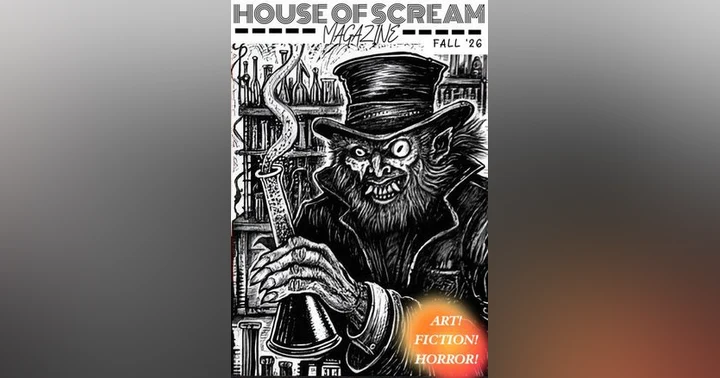
House of Scream Magazine - Fall '26